Last week’s radio show, my first back in-studio in a few weeks, was fun. Began with ‘Moroccan grime’ aka the standout track from Fnaire’s (not very good) new album which sounds like it was produced by Wiley in 2005. Check it, and lots more new heat:

+ + +
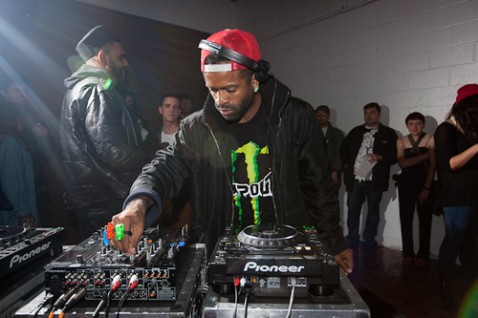
[DJ Total Freedom, Paper Mag]

And this Wednesday, July 18th, we’ll have special guest artist Ashland Mines aka DJ Total Freedom in from Los Angeles!

Total Freedom was responsible for my favorite club DJ set last year – we played together at the Tormenta Tropical 4-year anniversary in LA and it was one of those rare sets were every song was a gem that I hadn’t heard before, exquisitely mixed and sequenced. Sometimes it can be very hard for non-DJ types to understand why (or how) a certain DJ is good at what they do; but on the flip side sometimes you can catch a tiny piece of a musician’s set and that’s enough to be wowed. Plus, when I DJed Wildness back in 2009 and spent a few days digging around the cumbia stores in downtown LA, everybody was like, “oh, you need to talk to Ashland.”

Ashland’s in town for Blasting Voice, his installation-performance-piece at Suzanne Geiss gallery: “on nine nights throughout the show, this stage will be activated by 27 performances — both linguistic and non-verbal, acoustic and electronic — exploring poetic and formal dimensions of amplification.”

From 8-9pm on WFMU this Wednesday, Total Freedom will play some tunes from his upcoming compilation, and we’ll talk about Blasting Voice, what’s going on in LA, thee olde arte of DJing, Monster Energy Drinks, Discos Barba Azul, and more.

[youtube width=”640″ height=”360″]http://youtu.be/QmhvqQ1nWGU[/youtube]

Friend of Dutty Artz, Sam Hilmer, and one half of the duo Trouble, has with his partner put together an ambitious project that started today in Bushwick, NY. You Are Here is an arts festival set in a life-size maze. From what I can remember, getting lost in a freaky real life maze is everyone’s David Bowie inflected childhood fantasy (I never even saw that movie, but remember wanting to get lost in it at some point) so check it out if you are passing through Brooklyn this July.

They are running a Kickstarter campaign that aims to bring the maze to Berlin, and they basically need to raise 2000 more dollars in three days (a donor will kick in the last amount if they reach $10,000.) Let’s see if a last minute Dutty familia push can put them over the top and out to Germany! Yeeeeeee!


Wow, LAMC has officially begun, and man- there is so many amazing events popping off,  so here are a few of the many that friends, family and myself are apart of in one form or another-

This Thursday 7/12/12  @Bembe, we got Subsuelo coming through the monthly party Hot Sauce, throwin by my crew Cumba Mela. Subsuelo is a party based out of LA. One of the co-founders is a good friend of my Canyon Cody, who is currently working with Nacional Records. He is also running is own home grown label, Gnawledge.

Line up: Canyon, Gozar, Ethos, Thornato, 2melo, Atropolis


 This Saturday 7/14/2012 @Bembe // Que Bajo!?, we have the fresh and funky Xenia Rubinos, Gozar, and Captain Planet.  Check out Xenia Rubinos bellow, looking forward to seeing her live performance!  After that I am headed to Que Bajo!? LAMC throw down- its going to be crazy.


[vimeo]http://vimeo.com/35375248[/vimeo]

I’m a fan of judging books by their covers. Check this one out:
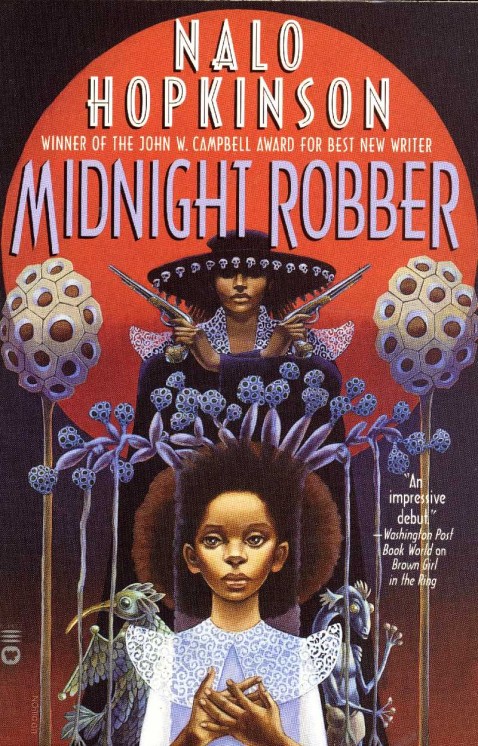
Awesome, right?

Our August Mudd Up Book Clubb selection is Nalo Hopkinson’s Midnight Robber. The novel kicks off during Carnival on a Caribbean colonized planet, where the AIs speak patois, and expands from there.

Folklore from Hopkinson’s native Caribbean meshes with a mind-expanding take on African diasporic technologies, issues of gender and sexual abuse, themes of exile and utopia and lawlessness, all written in a Creole-laced language whose musicality is a delight. Yuh see mi a say? Like Octavia Bulter, another Clubb favorite, Hopkinson renders a complex black woman protagonist at the heart of a tale that manages to be badass, weird-with-possibility, and filled with empathy even at its most harrowing.

Plus, let’s face it, we listen to a lot of music from the Caribbean but rarely do we read novels that spring from, engage, and extend that tradition. So–

Midnight Robber. We’ll meet in Manhattan on Sunday August 12th to chat about the book then go eat some doubles. (you join the Mudd Up Book Clubb by recommending a book).

+ + +
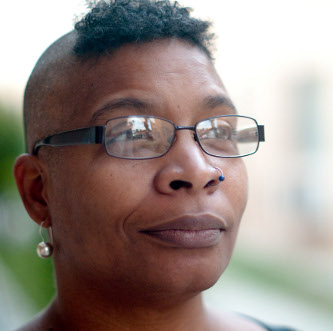
[Nalo Hopkinson, December 2011]

“She had was to learn, she had was to come to consciousness. Them days there, the programmers and them had write she protocols in Eleggua, seen — the code them invite to write programmes to create artificial intelligence?”

“Yes, me know.” Old-time story. Antonio sipped at the rum he’d brought to share with the Obi-Be’s son… – Midnight Robber

My Sufi Plug Ins project was underway when I read this book last year, but there was serious inspiration to be found, both in her approach to technology and in the role that language(as-interface) plays in the book’s writing itself as well as in the technologies depicted within it. Here are two interview excerpts where Nalo Hopkinson discusses these issues in Midnight Robber:

“So many of our stories about technology and our paradigms for it refer to Greek and Roman myth and language: we name rocket ships ‘Apollo’ and communication devices ‘telephone,’ a human-machine interface a ‘cyborg.’ It shapes not only the names for the technology we create, but the type of technology we create. I wondered what technologies a largely African diasporic culture might build, what stories its people might tell itself about technology. So a communication device that sees and hears becomes a ‘four-eye;’ literally, a seer. The artificial intelligence that safeguards all the people in a planetary system becomes Granny Nanny, named after the revolutionary and magic worker who won independent rule in Jamaica for the Maroons who had run away from slavery. Rather than being a ‘Big Brother’ paradigm it is an affectionate reference to her sense of love, care, and duty. The operating system that runs a dwelling is an ‘eshu,’ named after the West African deity who can be in all places at once, who is the ghost in the machine.”

“I grew up in a Caribbean literary community. It is perfectly acceptable there to write narrative and dialogue in the vernacular. It’s not that difficult to understand. I was interested in the way that Creoles can be accorded the full status of languages. The Creoles in this novel are the formal, written form of the language of the people in it. And the language shapes thought. If I had written Midnight Robber completely in English Standard, it would have had a very different feel and rhythm. I could say ‘Carnival revelry,’ but it wouldn’t convey movement, sound, joy the same way that ‘ring-bang ruction’ does.”

+ + +

Here’s the Mudd Up Book Clubb reading list – it’s been going for over a year now — in reverse chronological order:

Nalo Hopkinson, Midnight Robber

Michael Taussig, My Cocaine Museum

Tatyana Tolystaya, The Slynx

Augusto Moterroso, Mister Taylor

Vladimir Sorokin, Ice Trilogy

Lauren Beukes, Zoo City

Samuel R. Delany, Times Square Red, Times Square Blue

Juan Goytisolo, Exiled from Everywhere

Cesar Aira, How I Became a Nun

Maureen F. McHugh, Nekropolis

+ + +

& dont’ forget the Nalo Kindle-formatted screensaver!


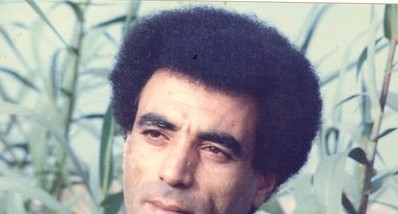
[old photo of Izenzaren’s lead singer, Igout Abdelhadi]

This week’s radio show was a slowdown stretchout, July 4th, fading flags. It begins with Izenzaren’s Akal, a lovely brand-new banjo jam which I saw them perform just a few days earlier down in Agadir Morocco. We later ran into the lead singer Igout Abdelhadi very randomly, while waiting to meet the king of Berber Auto-Tune… This whole trip was like that, one weird world after the other, bridged by serendipitous glue.

But radio. Most of this episode of Mudd Up is devoted to Gavin Bryar’s moving piece The Sinking of the Titanic; here I play the 1975 version produced & released by Brian Eno in its 30-minute entirety.

Next week I’ll be back in the studio for realtime radio, and week after that I’m very excited to announce that Total Freedom aka Ashland Mines will be the special guest. Details soon.

(Thanu and longtime Dutty Artz collaborator, DJ Ripley (Larisa Mann) are Detroit bound)

This week, we’re in Detroit for the Allied Media Conference, a networking conference for youth organizations, organizers/activists, technologists, educators, media reform advocates, alternative economists, musicians, DJs, artists, and others who come together to develop new ideas and expand upon the relationships between media and justice, and explore community approaches to social change.

There’s been a slew of discussions bubbling up online and off that involve politics, music and nightlife. It’s funny to us that these discussions often start with the assumption that politics and nightlife are different, because we have never experienced those worlds as separate, and neither do most of the communities we care about and live with. So we decided to start here from the assumption that there are already politics on the dancefloor and the questions is – how do we deal with it?

We wanted to share and start conversations around work that is meaningful to us as deejays, event planners, and organizers by discussing the relationship between activism and music– and how to explore dancefloors as sites of and for activism. What are the possibilities of challenging dominant social orders through the creation of dance space? How are certain spaces (gay ballrooms, queer dance parties, Jamaican street dances, for example) sites of resistance and how are they simultaneously valued, idealized & misused by those inside of those subcultures?

If you’re around the AMC these next few days, stop by our session on Friday at 4pm.

Here’s a short blurb (for a more thorough descript click here):

Radical Organizing from the Dancefloor

“You’re an activist? But you party so much!” Political activism and dancefloors – the languages don’t always overlap, neither do the people – but nightlife is key to survival and sanity for many marginalized communities. We will come up with tools to discuss nightlife with activists, the impact that cultural spaces can have, and how to embody activism on the dancefloor. Come share your favorite stories of political pleasure, failure or success on the dancefloor, and we will strategize responses to them, and other scenarios we have encountered as DJs and event planners. Location: Hilberry A (Student Center)

PRESENTERS: Larisa Mann (DJ Ripley), Surya Dub; Thanu Yakupitiyage, iBomba, Dutty Artz | #AMC2012 #raddances

You can check out all conference workshops in the program here.

We’ll keep you up to date from AMC, so stay tuned for more! You can also follow us on twitter – @laripley and @ty_ushka. Dutty Artz crew member, @TAL1ES1N is also at AMC, so follow him too.

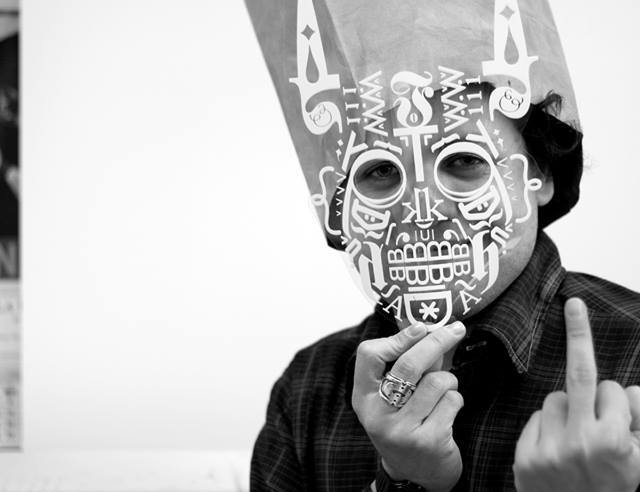
Diego Gutierrez is a graphic designer and art director. Born in Oaxaca and raised in San Miguel de Allende, Mexico, he has over a decade of working experience in Rome, Los Angeles, and New York City, where he now resides. Gutierrez is motivated by a belief that every design piece should fit into a larger, long-term project vision. This holistic process-based approach capitalizes on his communication skills and enables him to develop a compelling visual language that’s unique to each situation. Gutierrez currently does art direction/design for major corporate clients like Simon & Schuster, Colgate-Palmolive and Nestle-Purina; oversees the visual identity for independent music label Dutty Artz and New York’s leading Latin electronic dance music party Que Bajo; and has contributed original designs to projects such as Green Patriot Posters: Images for a New Activism, Hello Bad Mind and Uncropped Magazine.

Check out all of his work at Talacha.net

The last Mudd Up Book Clubb meetup was the most special to date, as The Slynx’s author Tatyana Tolystaya herself showed up unexpectedly. Translator Jamey Gambrell was able to join us as well. INCREDIBLE. To discuss one of my favorite books with its author & translator was a rare treat.

+ + +

[Taussig in a garden with yagé vines with Don Pedro, an Indian healer. Colombia, 1977. Via Cabinet.]

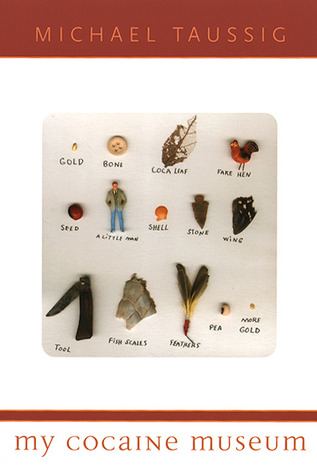
Our next selection is Michael Taussig’s My Cocaine Museum. Stoned anthropology written as a slide through heat & sensation in the shadow of Walter Benjamin. Thinking about gold, cocaine, slavery, boredom, color, history, centered around Afro-Colombian gold miners on Colombia’s Pacific coast. This is our second nonfiction book so far, and like Delany’s Times Sq Red, Times Sq Blue, the prose is incandescent, challenging and rewarding. Join us, we’ll meet in NYC on July 8th for My Cocaine Museum.

Here’s an excerpt from the beginning of the “A Dog Growls” chapter:

A dog growls in the doorway of the house where I am staying in Gaupí. I have never heard this dog growl before. I look out into the street, There are two armed soldiers walking by on patrol in standard-issue camouflage. Strange how the dog picks up what most of us feel but do not express. What would happen if we all growled when soldiers walked by? A whole town growling! How wonderfully appropriate to growl back at the state, mimicking it, growl for growl, watching it magnify in the fullness of biological prehistory, writing being but another form of hair rising on the back of the neck. Slap up against the wall of the forest, you get an acute sense of the thing called the state. To me this is more than a heightening of contradiction exposing something hidden. I think of it as natural history, the natural history of the state.

Writing is sixth sense, what dogs are supposed to have, same as what filled the space between the words.

The first place I ever DJed cumbia was at Taussig’s place in upstate New York (a good friend was getting married – wedding DJ!). It wasn’t until a year or two later when I stumbled across all these lovely tracks from the Rio Timbiqui area of Colombia which he writes about so richly in My Cocaine Museum.

A laptop theft took those tunes out of my hands again, but here’s a related song. “I don’t want it” by Grupo Gualajo – a gorgeous marimba jam about foreigners coming to Pacific Colombia to spirit away “our music, our records, and tales of our ancestors / they arrive happy back home / because they took all our inspiration / we don’t value what we have / others come and take the best…”

[audio:http://negrophonic.com/mp3/Grupo_Gualajo-No_Quiero-www.negrophonic.com.mp3]

Grupo Gualajo – No Quiero (from the Afritanga comp)

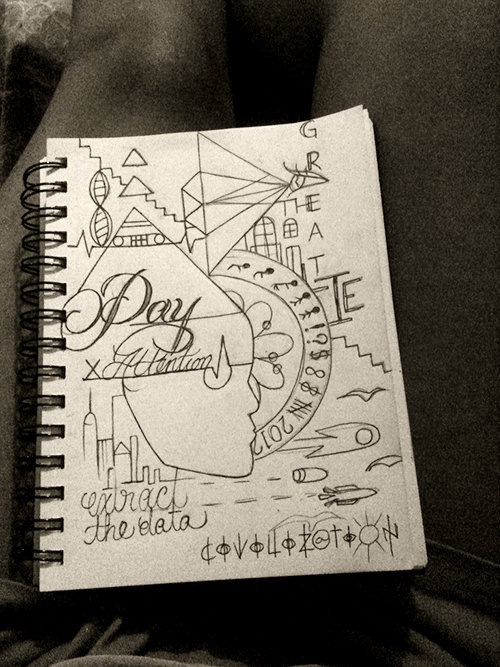
I sent my super talented artist friend Mreeuh Chang our Chants Remix, and a couple of hours later, I got back the sketch you see above.

Says Mreeuh: “I was workin on sketches when I received the song, this is what transpired. Don’t think I’m done. May turn it into a painting.”

Which of course, it did.

I think that this is the first time than an unsolicited sketch/painting emerged from sounds+words that I helped create. Which of course, was based on sounds that someone else created! And words that other people spoke! Miiiiiiiindwarp. Can’t even describe how much this shit boosted mines. Humbling and ego lifting at the same time, if that’s possible? Made me feel…understood, and shit. Thanks Mreeuh.

And if anyone reading this finds themselves in Cincinnati and in need of a tattoo, or just dope visual art in general, look her up.

Wednesday’s radio show with special guest DJ Javier Estrada is now streaming! El programa de este miercoles con la participación especial de Dj Javier Estrada ahora streaming!

We go in deep, with Javier explaining why he made 430 songs in the last three years & gave them all away for free; an introduction to the legacy of cumbia in his hometown of Monterrey Mexico and how that manifests itself in his remixes, making crowd-pleasing norteno aliens, talk of indigenous gods, and lots more. Bilingual to boot.

Vamos en profundidad, con Javier explicándonos por qué produjo 430 canciones en los últimos tres años y las ofrecio gratis; dándonos una introducción al legado de la cumbia en su ciudad Monterrey México y enlazándolo con sus remixes, norteños que comunican con los aliens, beats que hablan de dioses indígenas y mucho más. Bilingüe hasta la médula.

The evening ended with a fantastic LES rooftop hangout: Rotterdam’s Munchi, Javier, Bass Squad, and myself — incredibly, it was the first time that Munchi and Javier had met IRL! And Munchi and I finally had our breakcore conversation…

Last week’s radio show, In Praise of the Airhorn, is now streaming:

And I’m pleased to announce that prolific Mexican producer DJ Javier Estrada will be my special guest on tomorrow’s radio show. The young powerhouse from Monterrey is one of the most interesting beatmakers around right now, and I’ve got a coupla thousand of words-in-progress on why… Coming soon.

Until then — tune in tomorrow to catch DJ Javier Estrada live from 8-9pm EST, on WFMU! We’ll be talkin in Spanish with simultaneous translation by Talacha so all you monolingual gorillas can enjoy.

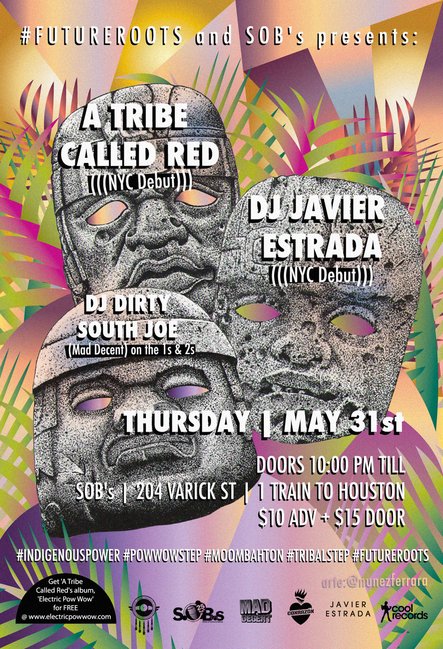
The radio show comes on the eve of Estrada’s NYC debut. We’ll have some tix to giveaway for his Thursday event with A Tribe Called Red.

Through putting on events and getting people onto dancefloors, one obviously meets all kinds of people. This to me has been essential to building with people, learning, and creating stronger communities. That person I meet on a dancefloor often becomes the next person I organize with, or becomes the person who has my back in some sort of crisis situation. Amongst the many people with amazing stories I’ve met recently through organizing iBomba has been Dylan Quiroga, a 25-yr old South African living in the D.C area. For the past few months, Dylan has consistently come up to New York for tropical parties such as iBomba and Que Bajo, music scenes he feels connected to. Curious as to why Dylan would spend hours on a bus to hit up New York’s scenes, he told me that he was making the most of his time left in the U.S, because Dylan is set to be deported this coming Tuesday.

Please help stop the deportation of Dylan Quiroga

I’m an immigrant rights activist – it isn’t a surprise to me that the people who feel connected to global “tropical” music, who come and get down at these events we throw, are of all sorts of complicated immigration statuses. That’s why the nature of who is on the dancefloor is political. While these genres defy borders, many of us who feel connected to it remain limited; but the musical environments themselves, even just for a few hours, provide a means to transcend the realities of immigration and other barriers that restrict our daily lives. Stories we hear on dancefloors sometimes compel us to take action- so here’s a final push to stop Dylan’s deportation.

With only four days to go, there’s still a lot that can be done. Dylan has been working with the National Immigration Youth Alliance to challenge his case and to push Immigration and Customs Enforcement (ICE) to grant him a stay of removal (meaning to allow him to stay). This week, a rally was held in D.C to challenge his case, and there is still time to sign this petition and call the office of ICE director, John Morton, to ask that his deportation be stopped. Please take a second to call this number; it makes a huge difference.

Here’s more on Dylan’s story:

In August 2011, Dylan Quiroga, an undocumented student, was trying to see what he could of the United States and intended to travel to several cities by Greyhound bus. He wanted to go to Detroit to check out Motown museums and Detroit’s music scene. While on a bus in upstate New York, to his surprise, Immigrations Custom Enforcement (ICE) randomly made a random search, asking all the passengers if they were U.S citizens and asking for identification. Dylan, with his South African passport and expired U.S visa, was detained.

Dylan came to the U.S at the age of 17 under a dependency visa when his father moved for work. While most of his family including his father, stepmother, and teenage sister eventually received greencards, Dylan was the only who could not qualify because he was over 21 and no longer considered a dependent. Despite this complication, Dylan decided to stay and pursue his education, facing many barriers including the inability to get into a nursing program because of his status. Instead, he paid his own way through community college while working in D.C’s service industry.

I asked Dylan how he had the strength- after the trauma of being detained by ICE, and going through two court dates where the legal advice he received was that he should sign a voluntary departure form and leave for South Africa, and living under the threat of deportation- to continue enjoying music when he could. He said,

“I really wanted to appreciate and enjoy the people in this country before I left. These parties and these communities are so special and you don’t find it in a lot of places. To get all these different cultures in one place is special. I wanted to take it in and experience as much as possible. That’s why whenever I had a chance to come up to New York I would because I didn’t know when I’d get the chance to enjoy it again. This music is a way to connect people from different backgrounds, it connects our stories. It helps people identify with each other.”

I had a whole conversation with Dylan on the phone this week, where we talked about all of the connections between migration, global bass, the immigration debate in the U.S. and the politics of our daily lives. Here’s the transcript of the rest of our conversation.

In the meantime, please take a minute to support Dylan’s case by calling the numbers and signing the petition [links above].

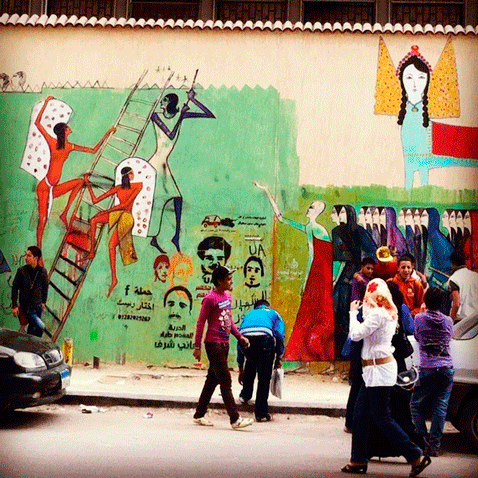
[kids & graffiti on Mhmd Mahmoud near Tahrir]

Cairo, Egypt. A few yards down from this graffiti lies the city’s best English language bookstore, and a few yards beyond that, the former British army barracks turned into traffic circle elevated into iconic revolutionary space. Tahrir means Liberation.

With Egyptian presidential elections getting very close, now’s a good time to listen to Cairo, its sounds & music, its clamor and dignity.

Last Wednesday’s radio show with Arabic translator Humphrey Davies, recorded on location in Egypt, is now streaming, and it’s fantastic:

In it he discusses the sounds of Cairo from car-horn honking Morse code obscenities to the changing ways of voicing the divine; nostalgia for the 1940s and brand new sha3by lyrics; Nancy Arjam’s class-bending single and Oum Koulsoum’s ongoing appeal. We also touch upon the world of Egyptian publishing and get insight about Davies work as a translator (I just finished his translation of Alaa Al Aswany’s The Yacoubian Building, and it is excellent. Highly recommended.) including a preview into the amazing 19th ct Lebanese book he’s working on right now (which includes lists of “well known locations in hell” and “17 types of medieval glue”).

Special guest next week: Monterrey Mexico’s DJ Javier Estrada! Info soon.

[Former AUC library, Cairo]