Emeka Alams is my favorite “street-wear” designer- except I don’t know any other crews putting out gorgeous leather moccasins and imbuing their work with street-fresh historiography that goes thousands of fathoms deeper than your average hood-repping fitted or all over print tee.  Gold Cost Trading is simply THAT SHIT.

After selling out of our first run of DA logo tee’s last year (don’t worry there will be more in the Fall) I wanted to take our apparel game to that next level. With his its-just-clothes-but-more-than-just-clothes approach mirroring our own desire to push deeper then net-label or dj-collective would suggest it was a natural progression to link Emeka for a mini-collection. The results surpassed our already high expectations- Emeka’s been dropping black gold on projects like the Fela box set, Pusha-T’s last mix, the Damian Marley and Nas’ collabo, gorgeous gear with The Very Best,  and next level DM non-disclosure  shit we cant even begin to expose here. So make sure you hit your local gold-into-cash before this Friday- these are gonna sell off quick. Fifty hats in two color-ways and one hundred shirts.

Sink into Before 1444 on their site. Or read Emeka’s interview in Italian Vogue that dropped last week.

Since I’m holding things down in S. Africa- I thought I’d lace you with one of the bangers tearing up radio right now from Deep Level (H/T to 25 to Lyfe) and make the NY Tropics Connect with a classic.

Deep Level Ft Bongo Riot – Do Ya Ting

[audio: http://nyc.duttyartz.com/mp3s/Deep_Level-Do_Ya_Ting_(Feat.Bongo Riot).mp3]

Masters At Work- Black Gold of The Sun

[audio: http://nyc.duttyartz.com/mp3s/masters_at_work-nuyorican_soul-i_am_the_black_gold_of_the_sun_(lead_vocals_by_jocelyn_brown.mp3]

LETS GET PHYSICAL

[vimeo]http://vimeo.com/22847992[/vimeo]
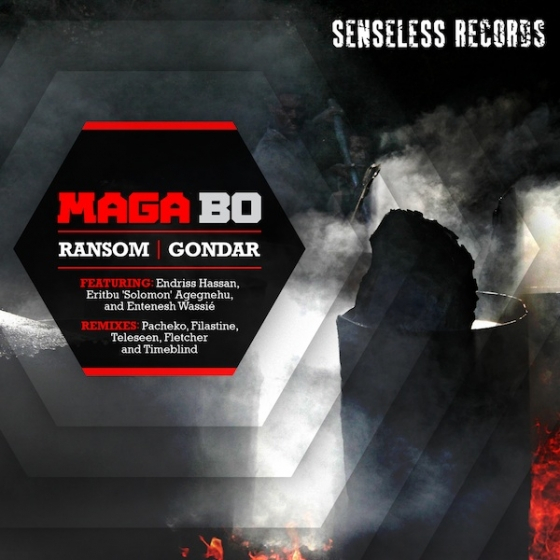
Maga Bo – “Gondar feat. Eritbu ‘Solomon’ Agegnehu and Entenesh Wassié”

Here’s a video from Dutty Artz family and habitual transnational/borderless bass collaborationist Maga Bo. Filmed in Addis Ababa, Ethiopia, the beautifully shot video for the track “Gondar” which from Maga Bo’s most recent release Ransom EP out now on Senseless Records. Not only providing a glimpse into Bo’s recording process and collaboration with the two Ethiopian musicians – masinqo player Eritbu “Solomon” Agegnehu and singer Entenesh Wassié, we are treated with some wonderful Addis ambiance, plus some beautiful girls dancing to the traditional Azmari song, which Bo laced up/reinforced with some dancehall-like riddim! Stream to the entire Ransom EP on Bandcamp – with remixes from Filastine, Timeblind, Teleseen, Pacheko, and Fletcher.

It also goes without saying that Bo is repping Dutty Artz extra hard in this one! We’ve some some incredible gear coming your way soon too.

So the time is finally here. Atropolis has dropped. We’ve been getting love across the board from KEXP in Seattle (#2 world music charts!) to Blackdown’s Rinse sets. We are psyched to bring this incredible debut out and you can expect to hear much much more from Atropolis. You can cop it digitally at your preferred retailer below- or grab physical direct from Revolver. If you missed the sick mix Atropolis did for Cluster. Check it now.

Atropolis – Mix 001 by Cluster Mag

You can also check Atropolis rocking a dj set with his collective Cumba Mela and the killer Chancha Via Circuito tonight at Public Assembly 70 N. 6th in BK $8 b4 11PM $10 after. If you can’t make tonight the release party will go down May 13th at Sweat Lodge.

Cop Atropolis At Your Preferred Retailer.
– Itunes US
http://itunes.apple.com/us/album/atropolis/id430437552

– Beatport
http://beatport.com/s/r1wctb

– Juno
http://www.junodownload.com/products/atropolis/1738111-02/

– Turntable Lab
http://digital.turntablelab.com/release/14157/

– Boomkat
http://boomkat.com/downloads/402732-atropolis-atropolis


world hood

Not really a lot of commentary about this besides the fact that I just listened to it like 19 times in a row.  This is, how you say, my shit.  Sweet and low rnb en espanol by World Hood out of Sacramento with Peligrosa crew’s own Sonora coming in hard body on the remix. Big tune, and it’s downloadable via the soundcloud page, so get to it.

World Hood/Estrella Sanchez – Indigenous 808 (sonora remix) by SONORA

Here’s the video for the original, which is also very nice:

[youtube]http://www.youtube.com/watch?v=CTEnWRu3qV0&feature=player_embedded[/youtube]

Last night’s radio show, SIPPIN’ BATHWATER, is now streaming. Over the course of 60 minutes: Lapalux provides a timely antidote for those suffering from the letdown of James Blake’s album, Quechua queen Luzmila Carpio occupies her rightful place as the missing link between Gang Gang Dance and Gang Gang Dance, Bombino’s Sahelian compositions acquire a desert-motorik lean, Lamin Fofana enters the building, Clams Casino gets motivational in a subtractive #based mode, Tim Hecker shimmers anew, and Berber highlights fresh from Casablanca sweeten New York’s reluctant spring air.

Image

My Beyond Digital crew is currently looking to hire a web designer to help us construct the Beyond Digital: Morocco site. Experience with multi-lingual sites and WP-installs that can switch between languages is a plus. We need someone available immediately.

Interested parties, please send your portfolio/resume and an email of introduction to: activate at beyond-digital.org.

[audio: http://nyc.duttyartz.com/mp3s/grouper-Alien_Observer-02-Alien_Observer.mp3]
Grouper – “Alien Observer”

Last week, Portland, Oregon based musician Liz Harris, better known as Grouper released two separate incredible albums, Alien Observer & Dream Loss, wrapped together as A I A. Preview the striking Wurlitzer pulses and sweet drones title track from Alien Observer above. A I A is beautiful, strange, and unsettling; harsh, heavy drones & dark, delicate tones; songs about aliens and ghosts & loves lost and love yet to happen. Liz Harris also made a series of rare east coast live appearances, one of which was at Brklyn’s Glasslands last Saturday. Harris gave such a mesmerizing performance, the crowd was pin drop silent and so attentive you could hear the sound from the venue two doors down bleeding into Glasslands.

Harris describing her new albums: “Dream Loss is a collection of older songs, mostly written before a hard time. Alien Observer, for the most part, is made of songs recorded after that time. Each has a song that belongs thematically on the other, a seam stitching them together. Both albums… explore otherness. Being an other to one’s own self, to other humans; ghosts and aliens, both literal and metaphorical; and other worlds to escape to (beneath the water, in the sky). Thinking about people who have died…

The process of making these albums reacquainted me with what I want to explore in music: friction, exploration of something large and outside of me, describing and traveling to intangible objects and places, unseen movements and connections between people and spaces. Songs that move on their own, that have an autonomous monstrous quality, songs from another world.”

One of the first performances recorded in the history of the New World was of limbo, the “slave ship dance.” Slave ship logs as early as 1664 document this dance in the experience of enslaved Africans who traveled across the Middle Passage. Known for its effectiveness as a “ritual of rebirth” based on the healthy exercise received from the dance, limbo forms part of the entertainment repertoire in the contemporary tourism industry, and in 1993 to 1994, and 2007 it was a popular dance in dancehall, along with the tatti, the world dance and the erkle. The use of these dances in this way highlights the attempt to locate the history of dancehall in the ancient practice of free Africans and, later, the enslaved peoples… The dance, which involves the body moving under a stick, is thought to have emerged out of the lack of space available on the slave ships, necessitating the slaves bending themselves like spiders. The dance reflects this in the constant lowering of the stick, ostensibly until it touches the ground, and clearing the stick with a lowered back and bent knees presents an ordeal increasing proportionately with the lowering of the stick. This ordeal produces triumph for the dancer who can endure to survive the challenge. The African home and life lost are represented by the bending ordeal, and the promised land to be reached by the triumph of clearing the lowered stick. – “Dancehall: From Slave Ship to Ghetto”

Sonjah Stanley Niaah’s book “Dancehall” is an essential purchase for anyone who cares about music and/or popular culture and REQUIRED reading for anyone invested in contemporary Jamaican music. “Dancehall” is an academic text but Stanely Niaah’s passionate demands for a spiritual and spatial reading of popular culture transcend common misconceptions about the limitations of ivory word-smithing. When she lets her personal motivation and desire take purchase in her subjects Stanley Niaah’s writing takes on the intense urgency of Michael Taussig. I was lucky enough to spend some time with her in Kingston and through our conversations it was clear that this book is merely the vanguard for a larger project of re-inscribing the spiritual into academic understandings of popular culture and urban spatial practices. Her future projects include mapping performance and spiritual geographies and creating a global think tank to theorize best practices for documenting the ephemeral and often hidden worlds of life magic. Life magic being those practices which allow joy and love to manifest in the most marginalized and harshest conditions. SURVIVAL… IN STYLE.

2 Hour 2 Min radio rip exploring the spectral geography of Kingston, Jamaica 192kbps

[audio: http://nyc.duttyartz.com/mp3s/KINGSTONRADIORIP_DUTTYARTZ.mp3]

“Dancehall” takes its historical narrative arc from the spatial developments and growth of dancehall media-ecologies – from the dance yards of slavery days to Japanese sound Mighty Crown touring Jamaica. It would be easy to skim her work and find only this obsession with the constantly inventive and mutating space of (the) dancehall. Dancers bodies, audio recordings, brand Jamaica, and inventive but codified performance all circulate along routes previously uncharted. I am certain, however that Stanley Niaah is extricating a much more powerful and arcane set of practices. Her primary project isn’t about dancehall itself, but merely finds dancehall as the deeply coded and armored viral carrier of African spiritual forces that had to be sublimated under slavery.  If Obeah remains as the truly hidden (and illegal) raw manifestation of communication through consensus reality into deep time and space- dancehall is part of spiritual livitys emergent face, constantly mutating and moving seamlessly through commercial culture to recreate itself. If all of this is a little heavy- and it is, of course, “Dancehall” can also easily be read simply as a powerful addition to our understanding of contemporary media practices and the spatial and cultural ingenuity forced by limited resources. Stanley Niaah mimics this double masking in her own work, creating a text that, like dancehall will spread easily through global academic and research channels without necessarily revealing its true depth. For the initiate “Dancehall” is a powerful introduction to spiritual memetics in mass culture. Living To Perform. Performing to Live.

Cop at Amazon

We’ve slowly been dropping jems out the miraculous mind of Adam Partridge AKA Atropolis AKA the dopest NYC producer you’ve never heard of. His Cumba Mela project has been running for years, burning venues  across the city. It shouldn’t have been a surprise when his debut  album came to us fully formed. Most producers might throw out a slew of remixs or singles  while refining their sound – but the Atropolis sound doesn’t need to gestate 0ne bit.

Atropolis is Lush and humid with a digital veneer that leaves dancefloors dripping. Guest vocalists Anbuley and Noelia Fernandez push instrumentals that could easily  stand alone into synesthesic territory. Future Latin rhythms you’ll play from front to back without having to touch your preferred control surface. Soundtrack to a  sunrise ride home through Queens when you’re not ready for the party to end? We got you. In the North, Atropolis will run all summer. If your just getting into winter, it’s the electric blanket you need in your life. CD and Digital.

If you missed them circulating grab Atropolis’ truly mind melting Rita Indiana remix and original Asi Asi Asi below.

Rita Indiana – Los Poderes (Atropolis Remix)

[audio: http://downloads.pitchforkmedia.com/Rita%20Indiana%20-%20Los%20Poderes%20(Atropolis%20Remix).mp3]

Atropolis – Asi Asi Asi Feat. Noelia Fernandez

[audio: http://nyc.duttyartz.com/mp3s/Atropolis_Asi_Asi_Asi.mp3]

Expect a new mix and few more bits to find their way onto your DL folder before the month ends. His live debut will be at our May 12 Sweat Lodge….

Chimu Pots Representing Decapitated Heads (Museo del Larco, Cusco)


“They’re widows,” the woman standing behind the till explained. I had spotted the two viudas, Rosita and Ricardina, dancing slowly to the huaynos playing on the speakers. This was one of those tiny stores that seem to sell everything.  On this Saturday, I stopped in to ask the way to the one discoteca in Ollantaytambo—one of longest continuously occupied settlements in Peru. The town lies on the banks of thw Orubamba River, which runs through the Sacred Valley. Agricultural terraces (“andenes”)—from the age of the Incas—slice through the steep sides of the Andes. Inca stone houses, temples, and look out posts dot the mountainsides. An hour-long train ride would bring you to Macchu Pichu.

Rosita swayed with her liter bottle of Pilsen beer; Ricardina grabbed my hands in her rough hands, teaching me how to step and slowly spin around to this popular folk music. A shrill voice sang of how dead mothers, traitorous lovers to saccharine cascades of the harp.

“Somos campesinas,” the women repeated. “We’re peasants.” Ricardina told me she was 30 and had three children, and that Rosita was 35 and had five children. They each looked at least ten years older than they said. Rosita handed me their glass and poured me a cup of their beer.

Before leaving, I asked the shop owner if she sold huayno CDs. She began leafing through a stack of her own burned CD-Rs. “Here, this is another copy of who we’re listening to.” She handed over a CD marker-scrawled “Alicia Delgado” to me. I asked her the cost. “Whatever you feel like,” she answered. I handed her two sol coins.

A couple days later on a drive between Cusco and Pisaq, our taxi driver was playing huayno from a USB stick connected to his car stereo. The USB stick dangled where a rosary or pine-tree-shaped air freshener might hang. I told him that I had bought an MP3-CD of Alicia Delgado. “She dead now,” he intoned, “She was murdered in her home. Someone tortured her first.” He said this was never solved, but guessed it probably had to do with money since she was rich.

In Lima, a few days later, after stopping in at the used LP market, Galeria Quilca, I mentioned Alicia to another taxi driver, a friend of a friend. “Yeah, she was murdered by her girlfriend,” he said in California-accented English. “Abencia Meza also sings folkloric music. She was a better singer and made Alicia famous too, but then Alicia cheated on her with her harpist.”

“Abencia is out of jail now and has a new girlfriend. In Lima, you know, you can get someone to kill for you. There are places, neighborhoods to go to. You can get someone to kill for $50,” my driver told me. “That’s why I’m friends with everyone,” he smiled. “It’s much better that way.”

Alicia Delgado-Regresa Madre

[audio:http://nyc.duttyartz.com/mp3s/066%20regresa%20madre.mp3]

Alicia Delgado-En Una Noche de Luna

[audio:http://nyc.duttyartz.com/mp3s/alicia%20delgado-%20en%20una%20noche%20de%20luna.mp3]

You can order our killer 12″ from Dubbel Dutch now from Crosstalk HERE. Numbers are limited, but it should reach all your favorite shops shortly.

Fact is calling this “the most realised embodiment of Dutch’s wide-reaching, net-digging aesthetic to date,” and from a producer who already gets plays NguzuNguzu, Untold, Bok Bok, L- Vis 1990, Sinden, Brodinski, Jamie XX, and DA crew,  THAT’S NO JOKE

When Shadetek  and /Rupture first came into the game, white labels and test presses were THE secret weapons in every DJ’s crate. Long before mp3 blasts and re-mastered youtube rips a trip to London or Berlin (or insane post charges)  meant the possibilities of getting your hands on exclusive fire. Wanting to bring the DA brand out of the limitations of bits and into the hearts and hands of their supporters, we have decided to make things- gear you can melt, scratch, break or lose when you move. An exclusive apparel collection with Gold Coast Trading Company and white label 12″ with our friend Dubbel Dutch are just the first of a series of interventions DA is making into the physical.

Dubbel Dutch – Fem Pressure 320 [audio: http://nyc.duttyartz.com/mp3s/A1.%20FEM%20PRESSURE-%20DUBBEL%20DUTCH.mp3]

DUTTY ARTZ – DUBBEL DUTCH WHITE LABEL (DA-011) by dubbeldutch

In just a few hours, today’s radio show with special guest Daniel Hernandez! Mudd Up Mondays 7pm-8pm EST wfmu.org 91.1 FM NYC.

Image

[Daniel Hernandez, photo by Hector ‘Chucho’ Jimenez for http://frente.com.mx/]

I previewed tonight’s show here. The above portrait comes from a recent Spanish-language interview in Frente (warning: it’s one of those horrible flash-based sites whose ‘digital layouts’ ensure that none of the content can ever be linked to). Clearly, Daniel brought the heat to our city today. The radio show kicks off his NYC stint, keep an eye out for the Thursday book party + Columbia U. talk

Right now I’d like to excerpt two sections from his new book, Down and Delirious in Mexico City. Together they hint at its narrative arc as Daniel moves from “a sort of native foreigner” to a sharp-eyed chilango whose self has been rewritten by the city he writes of — from ex-punks tending their aging legacies to the birth of fashion blogging to neo-indigenista sweat lodges– with such lyricism and insight.

from Chapter 2: Points of Arrival

“And this is the house where La Malinche lived,” Victor says, pointing to a plain colonial structure on Calle República de Cuba, in the Centro. The building doesn’t seem like much: pink walls, brown wooden doors that appear indifferent to their age, shuttered windows. On a wall high above the sidewalk, a tile marker with blue cursive script indicates that “according to the tradition” the house once belonged to a woman named Doña Marina. Also known by her Indian name Malinalli Tenepal, Marina served infamously as Hernán Cortés’s translator and mistress during his conquest of the Aztec empire.

Uff,” I respond, and frown. Among some Mexicans in the United States, La Malinche is reviled as a traitor, the Judas Iscariot of the New World. By grunting I think I am doing my duty.

But Victor, an artist with whom I have struck a fast friendship, recoils. “You Chicanos need to get over the conquista,” he says. “La Malinche was amazing. She was incredibly smart and beautiful and knew many languages. She is one of the only women historical figures we have from the period.”

I am strolling with Victor after lunch. It is a warm and drizzly day, mid-July 2002, just a few weeks into my first visit to Mexico City. From the moment I land, nearly every human interaction and every street corner turned offers an eye-widening lession. The onslaught of information and sensations leaves me fatigued. Almost anything I say is analyzed, mocked, or critiqued in relation to my being a sort of native foreigner — a Mexican born in the United States, Mexican but not quite. Victor’s reproach shocks my brain. . .

And then, crescendoing with feverish visions after several years spent in D.F., we get to this section of chapter 15: The Seven Muses of Mexico City:

Everything is thrilling in Mexico City because everything is out of whack. There is a sense of delirious rupture, everywhere. The Cathedral, built over a dead Aztec temple, is sinking. The video game arcades are packed. I’m looking at male stripper clubs for women in Iztapalapa, extremely open public displays of affection on the metro, between men and women, children, and men and men, at political propaganda calling for the death penalty for kidnappers. A man without legs is begging on the sidewalks, just a human stump riding a skateboard. A little indigenous girl is stricken with panic, screaming in an indigenous language, as she gets off a metro car before her mother can reach the closing doors. On the platforms, the blind are walking with blind. Chaos and mutation on every corner. How, I wonder, can we mediate the doom?

We are not asking it enough. We are watching out for ourselves, like true urban rats, wondering, What is it that I want? I fall into the same mind-frame, thinking lecherously, I want it all. I want clothes. I want the Hustle. I’m a Mexico City mutant eating sidewalk hamburgers for dinner under a pounding brown rain. I want cactus juice to flow through my veins. I want to dance upon the pyramids. I want to sweat droplets of jade. I want acid.

+ + +

Bogota’s Frente Cumbiero has a year-old mixtape of originals and edits, which makes for a fine soundtrack to our displaced Mexico City memories on this warm Nueva Jork / Puebla York / Neza York day:

– ROMPETRINCHE – MIXTAPE by FRENTECUMBIERO